

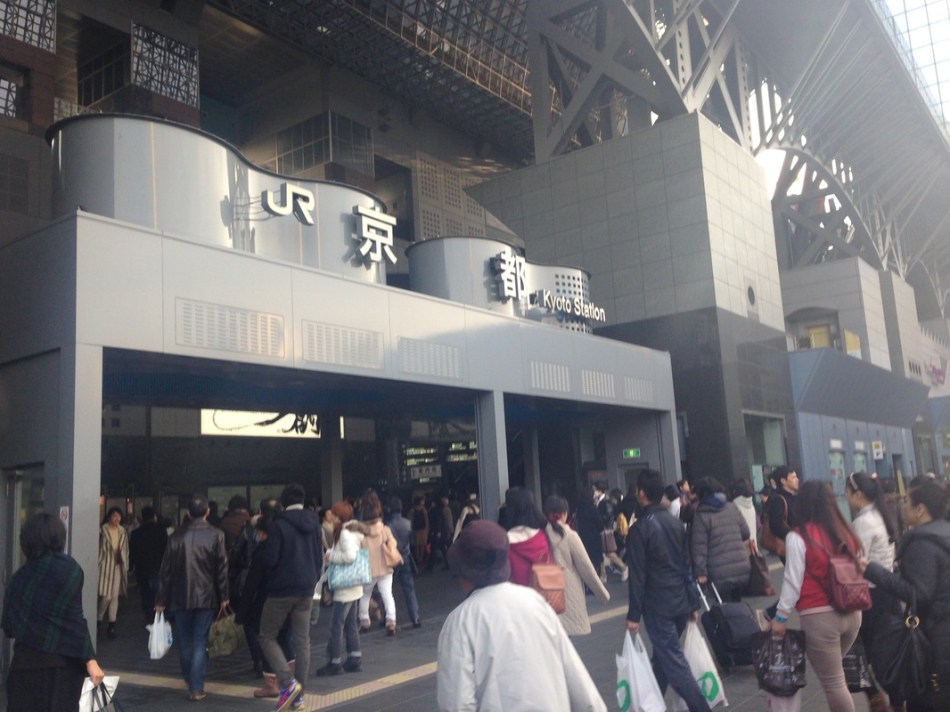
For my last (and most favorite day in Japan) we ventured out to Kyoto to see the lovely Fushimi Inari Shrines! We took about an hour train ride to the renowned Kyoto Station, which was full of bustling people even in the middle of the day. The station had the coolest architecture and was the largest that I’d seen in Japan. Kyoto is a popular city for worker bee’s and many people commute here for work each day. As soon as we arrived, I was already feeling pumped to explore Kyoto and head to the shrines!
 After another short train ride, we finally arrived at our destination! The entrance was marked with large Shinto shrines and brightly-colored temples. We raced up the hill to find the beautiful Fushimi Inari shrines.
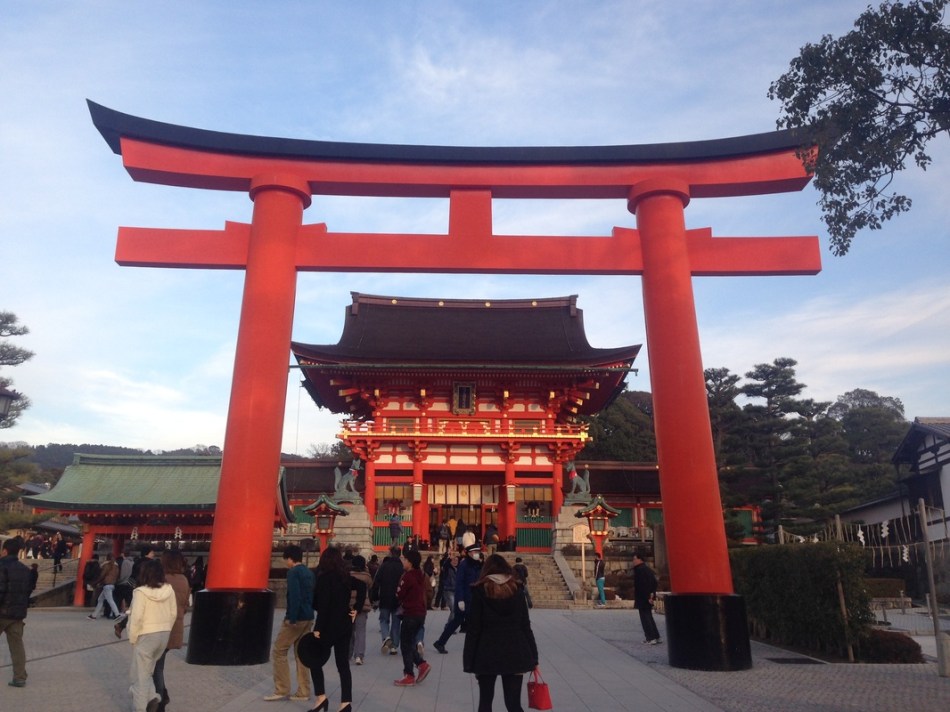
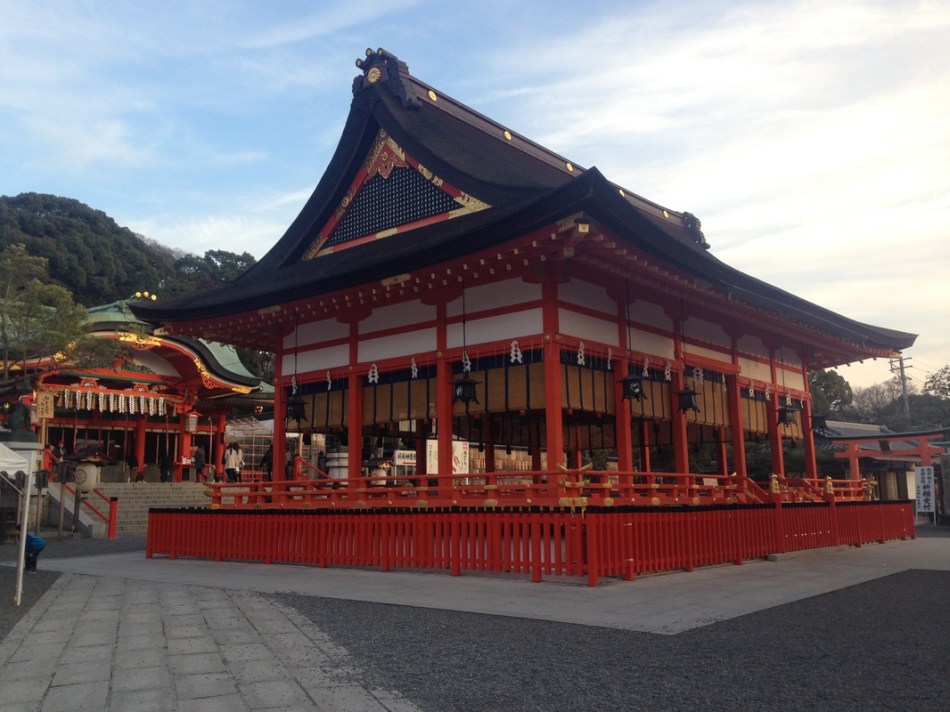
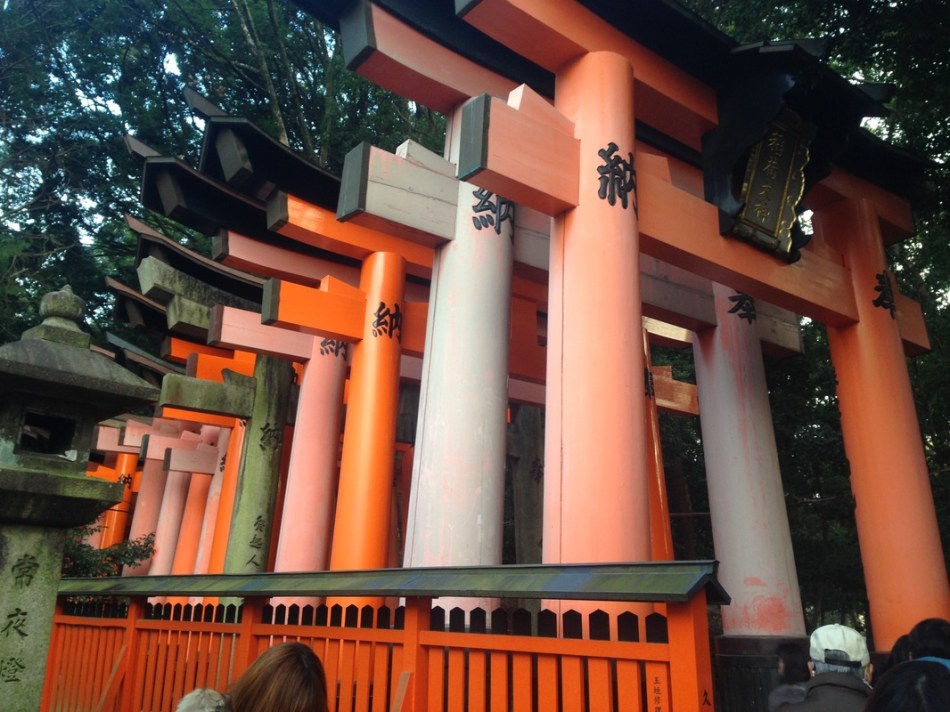
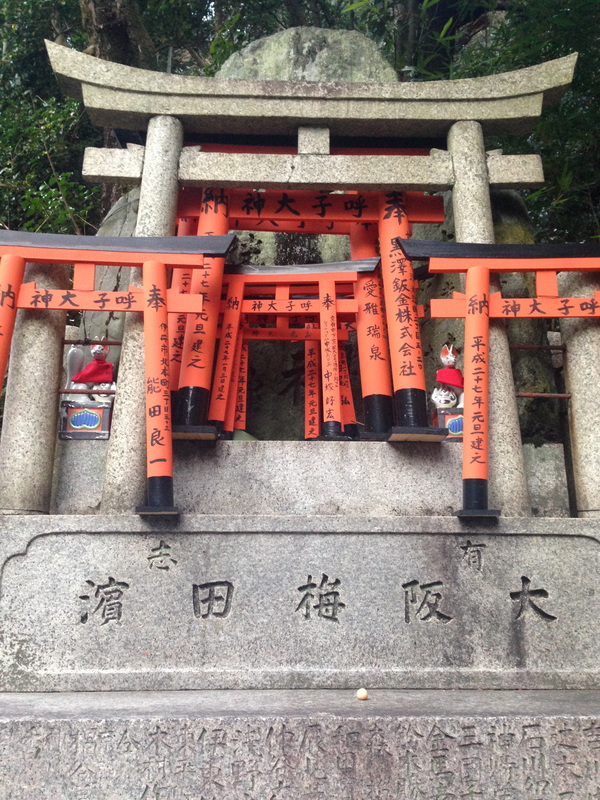
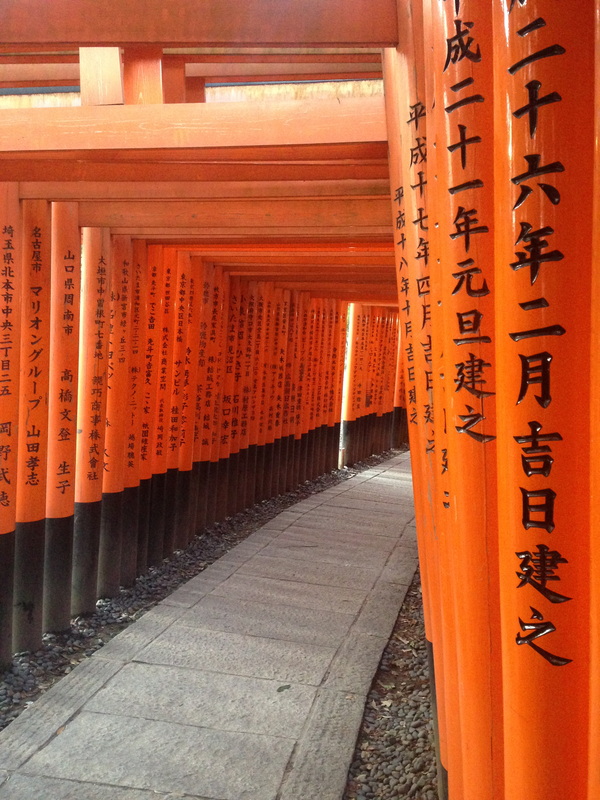
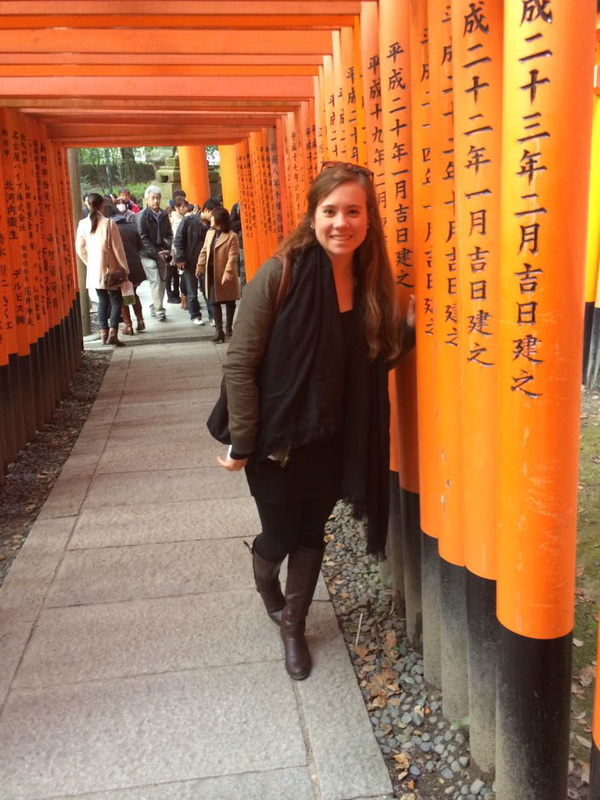 This was my first peak at the shrines. I was so excited I couldn’t stop running around and taking photos but Yuna was like “Ally come onnn there’s tons more!” In fact, these shrines have always kind of been on my fictional bucket list of things to do and see. I’ve never created a tangible list, because well, that’s just too limiting 😉 Ever since I saw the Fushimi Shrines in the movie Memoirs of a Geisha, I just knew I had to see them someday. In fact, I never knew why so many shinto shrines were lined up this way, as is quite odd to see in Japanese culture. Yuna explained to me that each of the shrines (or “torii”) are donated to this public park as private gifts, company gifts, in memory of lost ones, etc. and you can see the characters on the back of the shrines which indicate the family/company name and date it was constructed. It is an ancient Japanese tradition for businesses and merchants to worship Inari because he is the God of Rice and that is why they donate money to construct these shrines on Mount Inari.
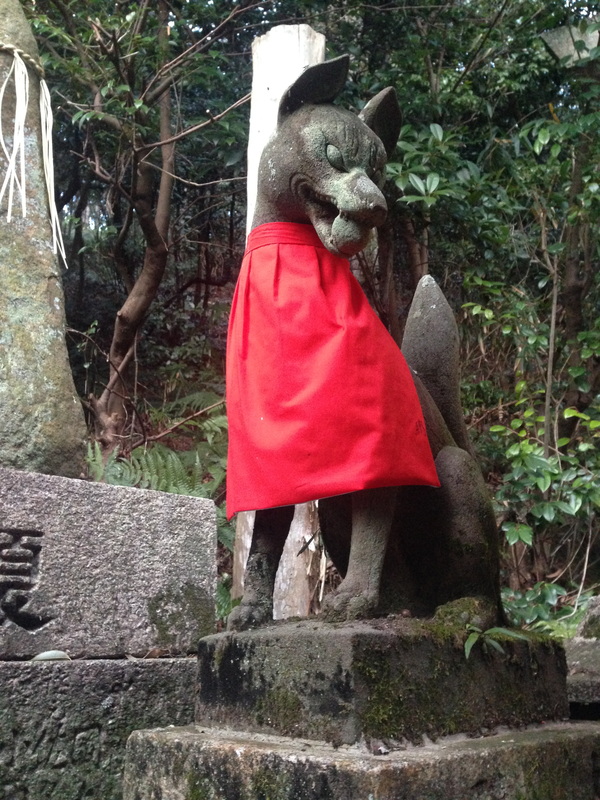
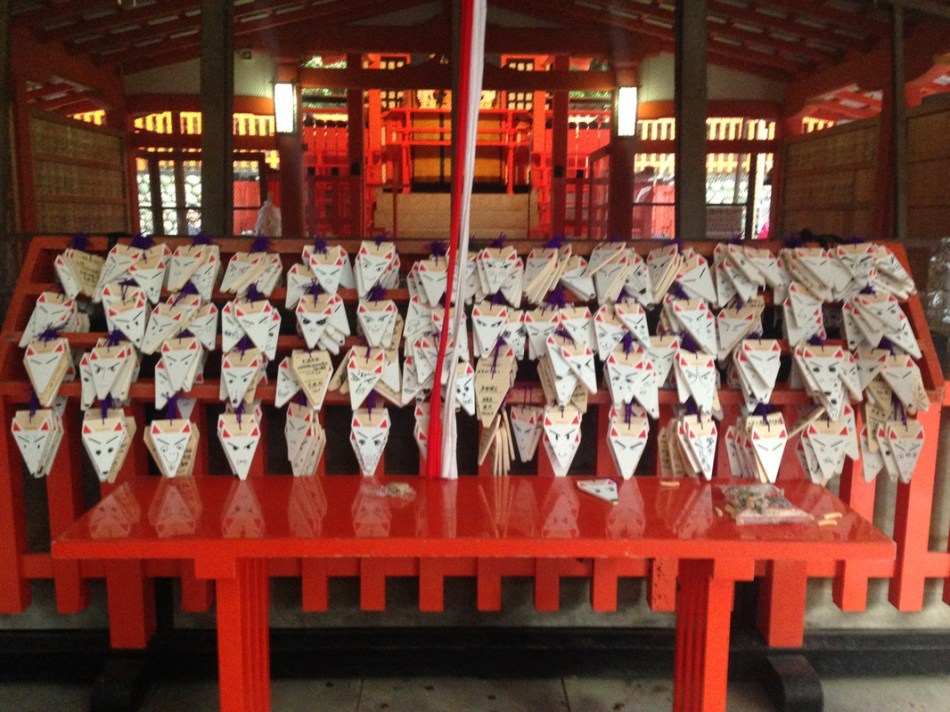
 Another cool thing I found out about the Fushimi Inari shrines was that the temple’s guardian was a fox. I was wondering because I kept seeing fox statues and the like around the shrines so Yuna explained their significance. This was a surprise because I had never seen or heard of foxes being temple guardians before. In China I always see lions, dragons, or large gods protecting shrines, so that was new to me. Evidently it is just Japanese tradition that foxes are the guardians of Inari shrines, but they are also said to be considered messengers and are thought to “hold the key to the rice granary” in their mouths.
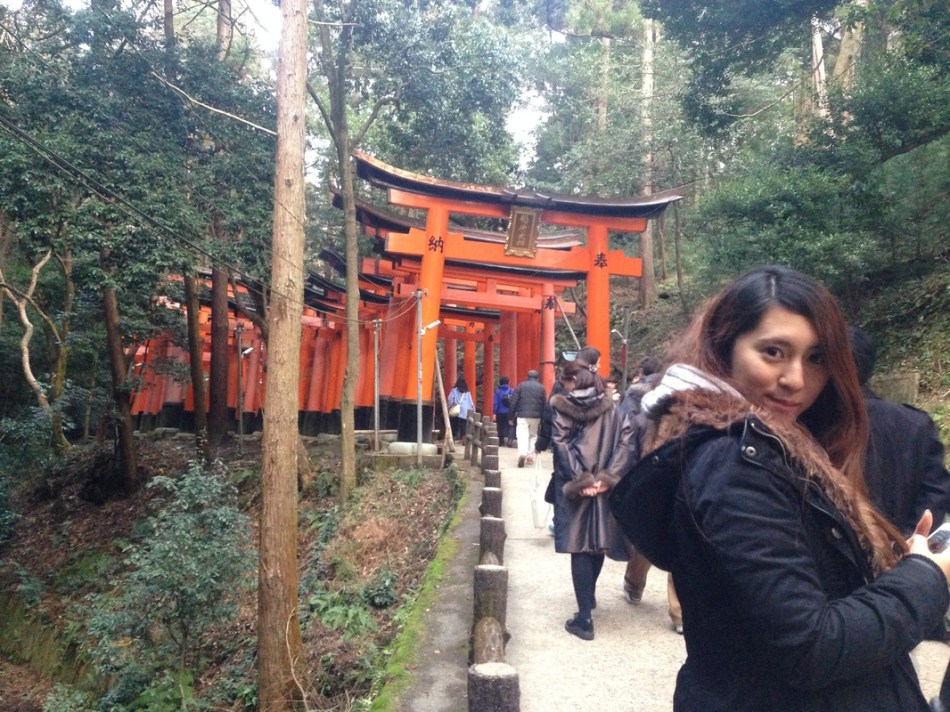
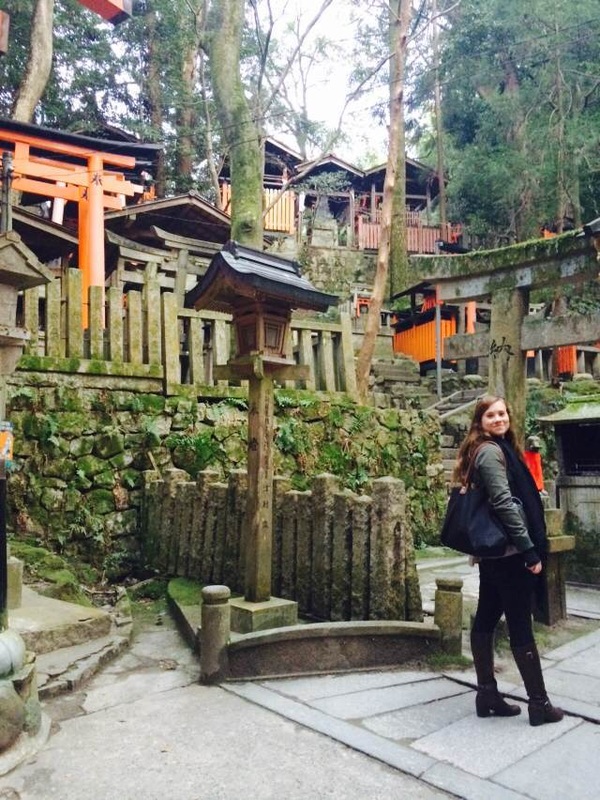
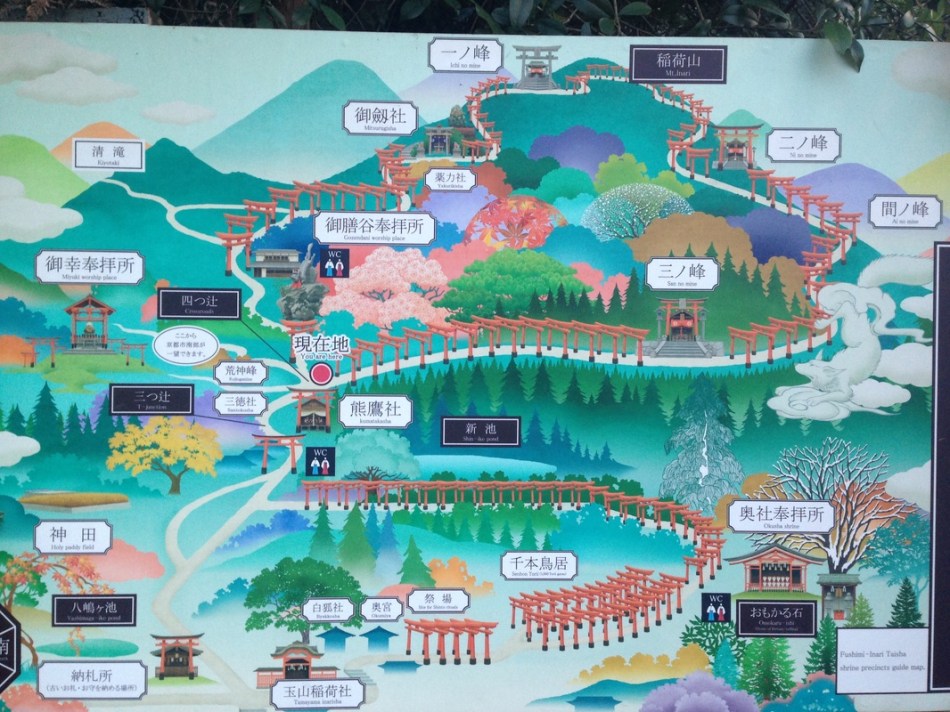
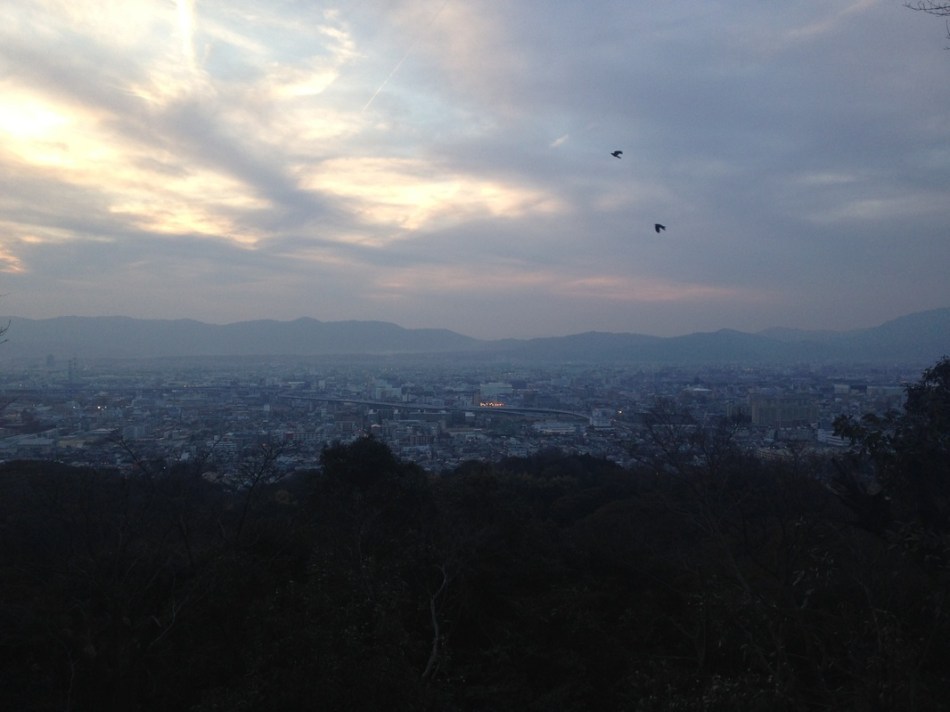
 So, here below you can see the map that we found portraying Mount Inari and all of the shrines found throughout. The whole span of shrines is about 2.5 miles and takes at least 2 hours just to walk UP the mountain. We started walking and decided the map scale was horribly portrayed because we were walking for what seemed forever and had gotten only to that RED DOT! What! Well, regardless we managed to find a great view of Kyoto and were able to walk through many torii shrines and see many temples. It would have been amazing to climb the whole mountain, but it was already getting dark and we still wanted to explore Kyoto, so we decided to leave. Ahhh I could have stayed there all day.
Side note: As badly as I wanted to get a classic photo showing the length of the empty shrine walkway, it is nearly IMPOSSIBLE to get a photo without another person in it. Actually, the shrines were very crowded when we were there and I was happy to photograph what I got. Even when you were very clearly waiting to get a great picture of the empty walk path, a random tourist would walk in front of you without any care in the world. Oh, Asia…
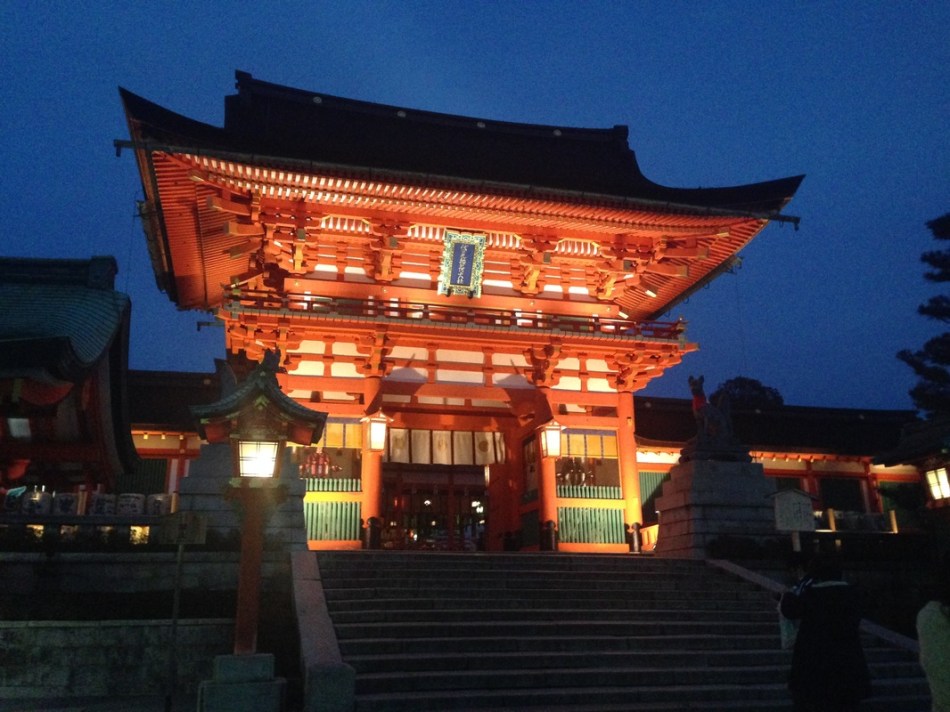
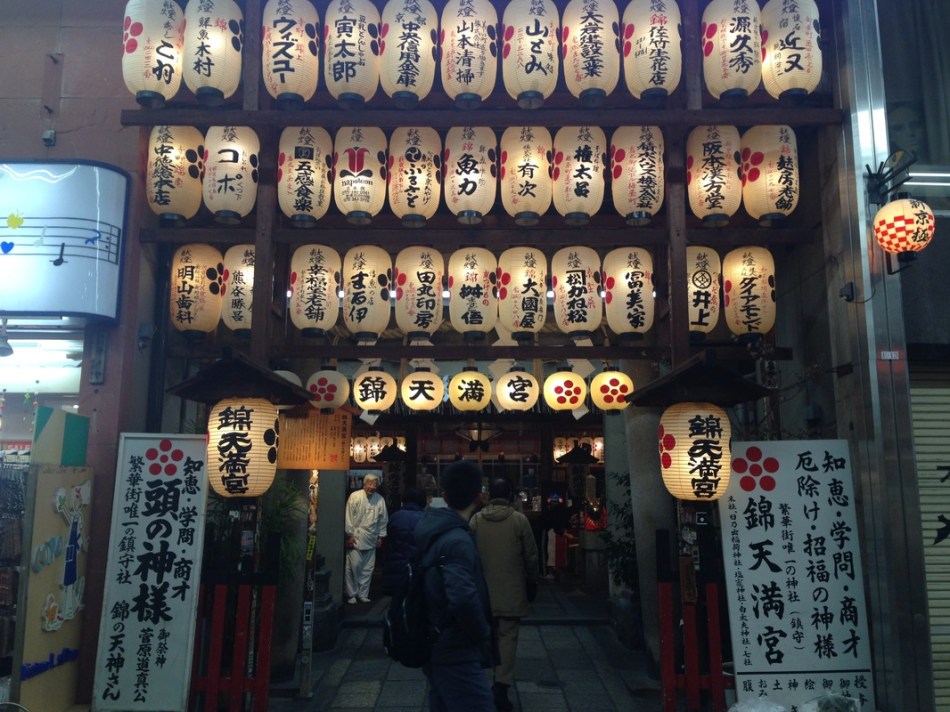 After we said good-bye to the shrines, we headed into downtown Kyoto to find some classic Japanese food for dinner. On the way we passed by this awesome looking building. Yuna told me it was a special temple where you can go to pray for good grades. LOL why don’t we have one of these?!
One unique Japanese cuisine that I hadn’t tried yet was Okonomiyaki, or as Yuna called it, a Japanese pancake, so she decided to take me to a little hole-in-the-wall Okonomiyaki restaurant. It was the coolest place! The restaurant was small but filled with people and we managed to get the last available table. I had no idea what to expect (or order) so Yuna did all the ordering for me and I got some sake for us to share to celebrate my last night in Japan!
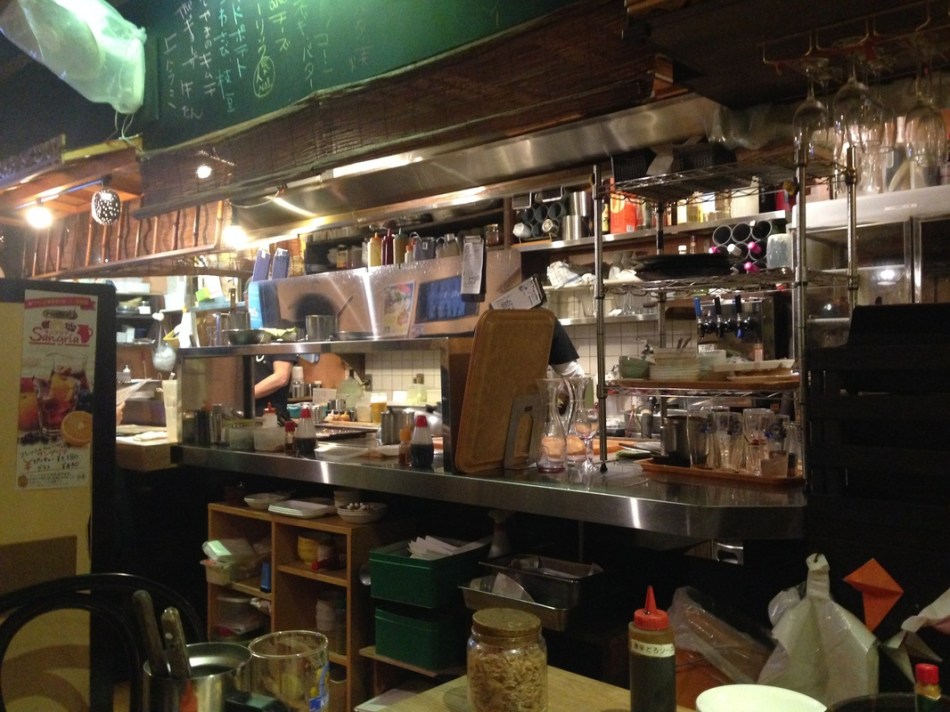
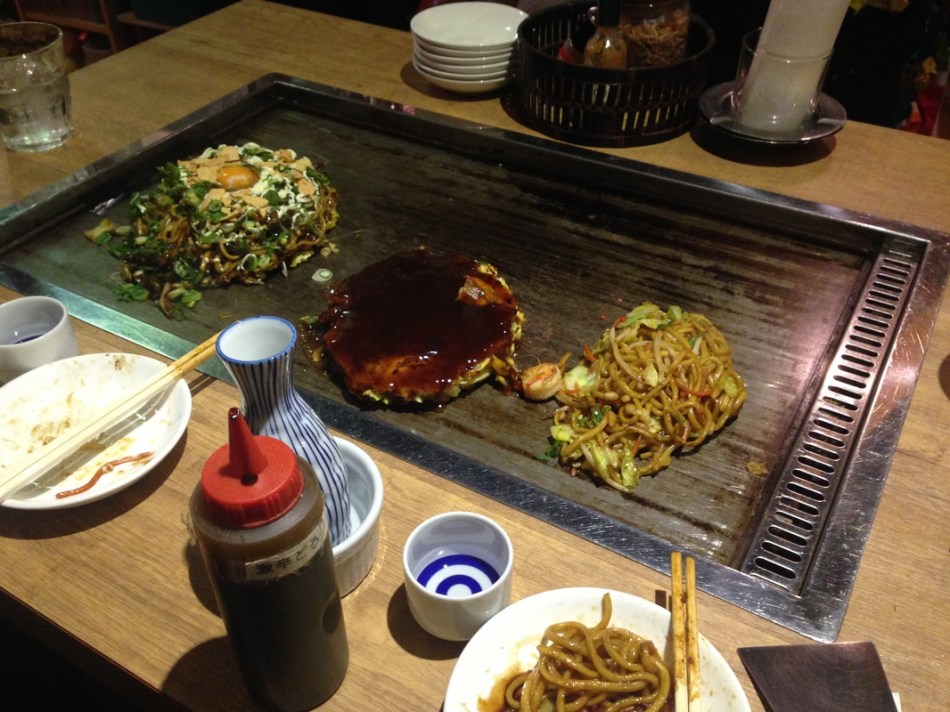 They prepared the pancakes in the chef’s station and then place them on this stove top to let them cook further and keep warm. I got a vegetable noodle combination and then we split the pancake in the middle which was made of cabbage, egg, shrimp, scallions and other vegetables. It was covered in worcestershire sauce (which is evidently huge in southern Japan), and was DELICIOUS! Oh wow why can’t Japanese restaurants in the U.S. have these babies. With our sake and pancakes, we had a great last dinner in Kyoto. What a great way to end my trip in Japan! Except for when I tried pulling open the bathroom door for 5 minutes without realizing it was a sliding door… uh duh Ally, you’re in Japan!
Overall, I had an amazing time in this country and experiencing another Asian country gave me a lot of perspective on living in China. One big thing that I noticed first off was remembering how uncomfortable you can feel in a country where you can’t communicate with anyone. I don’t know any Japanese, except being able to read a few characters here and there and “hello” and “thank you”, so that was an old but familiar feeling. Another thing was the comfort and ease of living. Although Japan has a condense population, their way of living seems much more calm, relaxed and comfortable compared to China. The Japanese suburbs were particularly interesting because you just don’t see that type of housing in China. Where as Japanese had small town homes, a typical Chinese suburb consists of high-rise apartments (although very nice inside). In China there is just much more pressure to condense as much space as possible, especially within the city. Also, although there were factories located throughout the city in Japan, the air was much cleaner because of the steady air currents rushing in from the sea, so that was refreshing. In addition, the food tasted much more pure and fresh, so I really enjoyed that, especially the Sushi bars! I decided I loved my time in Japan but there is still much more I want to experience and see! Next time, it will be Tokyo, Mount Fuji and northern Japan, for sure!
 my life above the sea
0 comments on “Japan: Kyoto Fushimi Inari Shrines // 日本的京都”